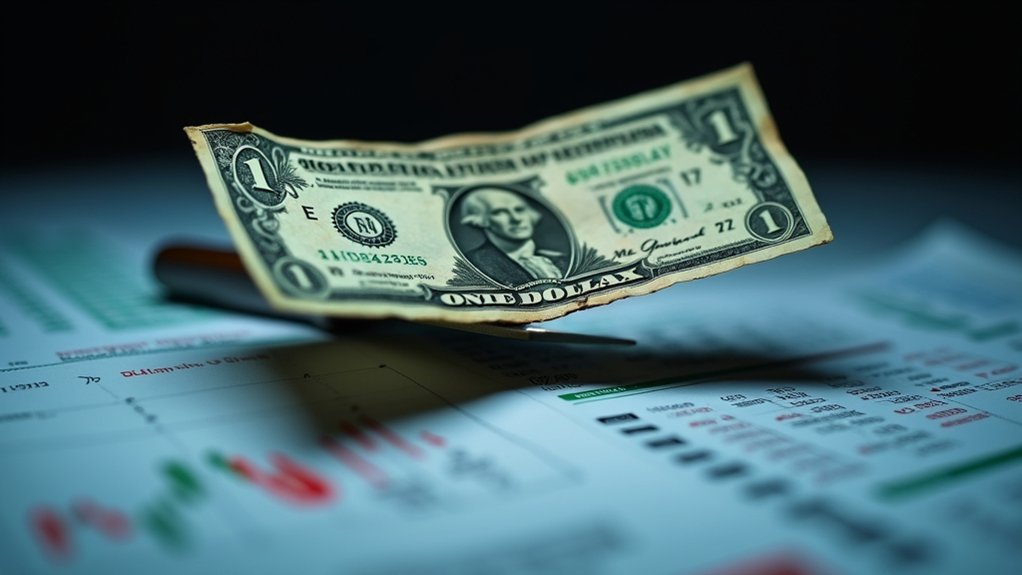

Every December, traders dust off the same old playbook: bet on the Santa Rally, count your gains, and coast into the new year feeling smug. Except this year, Santa apparently got stuck in the chimney. The S&P 500 sold off every single business day between Christmas and New Year in 2024–25, marking what analysts called a historic first—a reverse Santa Rally. Not exactly the festive cheer Wall Street was hoping for.
Santa got stuck in the chimney as the S&P 500 delivered a historic reverse rally nobody saw coming.
The Santa Rally, coined back in 1972 by Yale Hirsch, refers to the last five trading days of December plus the first two of January. During that stretch, the S&P 500 typically gains around 1.3 to 1.4 percent. Since 1950, this seven-day window has delivered positive returns roughly 76 to 79 percent of the time. It's one of the most reliable seasonal patterns in equity markets. Until it isn't.

Multiple factors usually drive the rally: light holiday trading volumes, reduced tax-loss selling, institutional window-dressing, and fresh cash allocations for the new year. Consumer spending around the holidays can lift cyclical and retail stocks, boosting major indices. But expectations around Federal Reserve policy also play a huge role in shaping risk appetite heading into year-end.
Which brings us to 2026. Markets are bitterly split on whether the Fed will cut rates that year. Fed funds futures and overnight index swaps embed multi-year policy expectations, but pricing for out-year cuts swings wildly based on inflation data, labor market prints, and Fed commentary about the long-run neutral rate. Right now, there's no consensus.
Historically, a weak or absent Santa Rally has been loosely linked to deteriorating investor confidence or macro uncertainty. Some old-school analysts even argue the Dow performs better in years following holiday seasons without a Santa Rally, treating the failure as a signal for cheaper entry points down the road. But using the Santa Rally to forecast full-year equity returns or Fed policy? That's mostly anecdotal folklore. Forward guidance about future monetary policy decisions helps central banks manage market expectations and reduce volatility around rate announcements.
Behind the scenes, central banks continue to wield the most influence over currency markets and broader risk sentiment, shaping how traders position themselves for rate decisions and policy shifts ahead. Economic data releases trigger immediate repricing across forex pairs as algorithms and human traders digest whether indicators beat, miss, or align with consensus forecasts. Bottom line: Santa didn't show this time. Whether that means trouble ahead or just a blip depends on inflation, the Fed, and a dozen other variables nobody can predict.