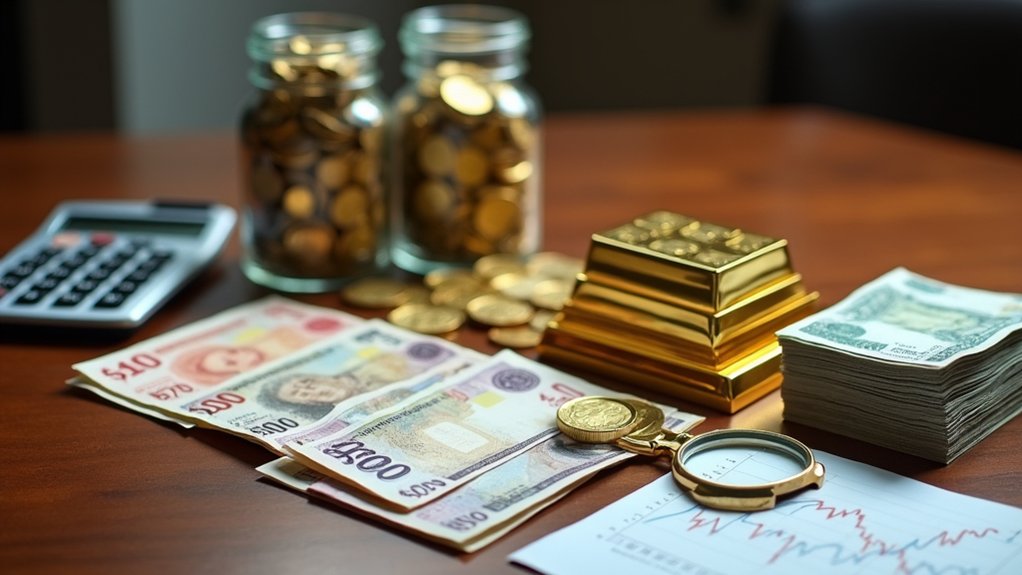

South Africa's foreign exchange reserves just hit a fresh all-time high—about 72 billion dollars in late 2025, up from roughly 71.6 billion the month before. Monthly records keep stacking up: 69.2 billion in July, 70.4 in August, 71.6 in October. The trajectory looks great on paper. The country has more than doubled its reserves compared with the 37 billion dollar average over 1998–2025. That's real progress from the dire 5.3 billion low back in 1998.
South Africa's reserves climbed to 72 billion dollars—impressive on paper, yet the trajectory masks deeper questions about what's driving the growth.
But here's the thing. A big chunk of this surge isn't about South Africa suddenly becoming an export powerhouse or attracting floods of investment. Gold prices went up globally, so the dollar value of the country's 16 billion in gold holdings jumped. The rand weakened at times, which mechanically inflated the dollar value of certain assets. Valuation games, not necessarily structural strength.

Foreign currency assets make up the bulk—roughly 49 billion dollars in October—plus several billion more in Special Drawing Rights from the IMF. Forward guidance suggests reserves will hover near 70–72 billion over the next two years under baseline assumptions. Sounds stable. Sounds reassuring.
Yet adequacy is relative. At about 4.7 months of import cover, South Africa sits in a moderate-to-comfortable range by standard metrics. That cushion could evaporate fast if terms of trade swing sharply or capital flows reverse. The reserve stock is sizable compared with many African peers but tiny next to large emerging markets. Mid-pack on global league tables, nothing more.
The real question is what those reserves are defending against. Short Africa's exchange controls overseen by the South African Reserve Bank add another layer of complexity to how these reserves interact with cross-border capital flows and the broader forex market. Short-term trade shocks? Maybe. But vulnerabilities run deeper than import bills. External debt, investor sentiment, structural constraints—all of these pressures don't vanish just because the central bank accumulated more dollars and gold. The South African Reserve Bank can deploy reserves through foreign exchange interventions to stabilize the rand during periods of acute market stress, though such moves are typically reserved for exceptional circumstances rather than routine volatility. As an emerging market currency, the rand remains susceptible to sudden sentiment shifts and global risk appetite changes that can quickly test even robust reserve positions.