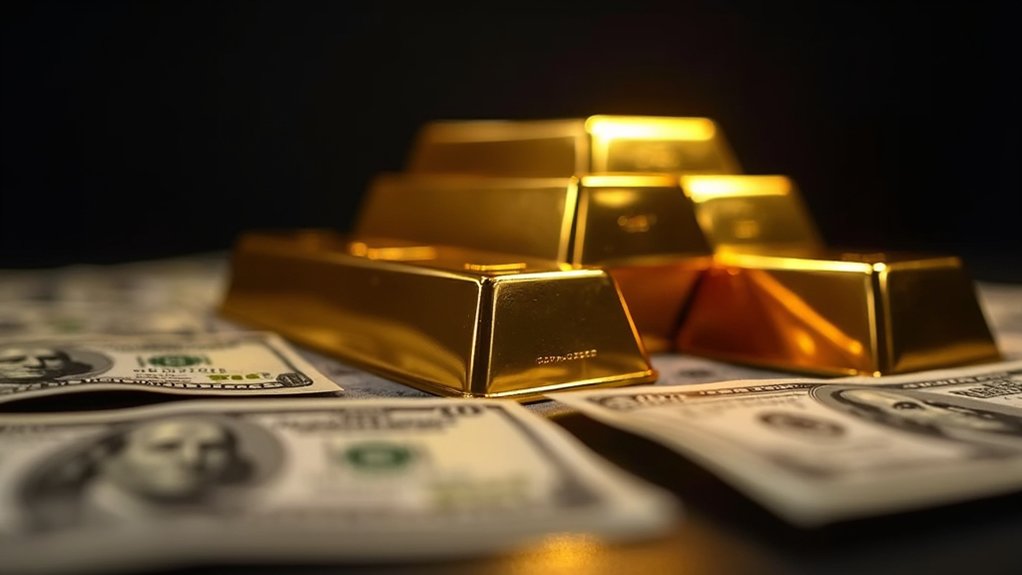

Gold blew past $4,200 an ounce this week, and the dollar's getting absolutely hammered. The US government shutdown finally got resolved, which sparked a massive rally across financial markets. Risk appetite came roaring back, the greenback weakened sharply, and gold just kept climbing. Five straight days of gains. That's the kind of momentum that gets people's attention.
The 10-year Treasury yield dropped to 4.07%, making gold look a lot more attractive. Lower yields mean lower opportunity cost for holding an asset that doesn't pay interest. Simple math. Meanwhile, inflation concerns kept intensifying, pushing investors toward anything that looks like a hedge. Gold fits that bill perfectly.

Central banks kept buying aggressively, which helped fuel the rally. Large funds piled in too, both for tactical plays and long-term strategic positioning. ETF inflows hit multi-month highs. Retail demand surged because, let's face it, nothing captures attention like new record highs splashed across headlines. Some analysts are now throwing around $5,000 price targets. Yeah, you read that right.
The technical picture looked bullish as hell. Breaking through $4,200 resistance triggered additional buying, with traders eyeing $4,250 to $4,300 next. Some are even talking about pushing toward the $4,380 record high. Volume and open interest in gold futures spiked, RSI indicators stayed above 50, and MACD lines crossed bullish. All the usual signals.
Geopolitical uncertainty played its part too, sustaining safe-haven demand even as risk appetite returned. Market anxieties over the fiscal outlook didn't just disappear because Congress passed a spending bill. Those concerns linger.
Silver tagged along for the ride, rallying toward $29 an ounce on similar drivers. Other precious metals gained ground too. Meanwhile, crude oil tanked—Brent fell to $62.62 and WTI to $58.38—after inventory builds and OPEC surplus projections dampened sentiment there.
The dollar index cratered against major currencies, which automatically translates to higher dollar-denominated gold prices. The interest rate decisions by central banks continue to drive forex market dynamics, amplifying the currency movements that make gold more or less expensive across different regions. Central bank policy changes have a direct impact on currency valuations, explaining the inverse relationship between dollar weakness and gold's surge. Emerging market currencies weakened further, pushing local-currency gold to all-time highs in multiple countries. The South African Rand plunged alongside other commodity-linked currencies, reflecting broader emerging market pressures in forex trading. Hedge funds shorted the dollar. The currency rout continues.