

Forex trading in Cabo Verde operates in a regulatory gray zone—no dedicated local overseer, no domestic brokers, and retail traders funneling money to offshore platforms regulated by ASIC, CySEC, or whoever else will take them. Banco de Cabo Verde provides general financial oversight and monitors for money laundering, but actual trade execution happens elsewhere. Leverage climbs to 1:500, spreads start at zero, and the whole setup relies on trusting foreign entities with segregated funds. The GMT-1 time zone catches London and New York sessions cleanly, which is nice, but scams thrive where regulation doesn't. Everything below unpacks the mechanics, risks, and realities.
Quick Facts That Matter
- Cabo Verde has no dedicated forex regulator; Banco de Cabo Verde provides general oversight while most retail trading occurs through offshore brokers.
- Traders rely on international brokers regulated by ASIC, CySEC, or FSA, offering leverage up to 1:500 and spreads from 0.0 pips.
- Cabo Verde's GMT-1 time zone aligns well with London and New York sessions, providing favorable trading hours without extreme overnight scheduling.
- Funding uses SWIFT transfers, e-wallets, or multi-currency cards; profits flow back in convertible currency subject to exchange rate conversions.
- Scams proliferate via social media platforms, featuring Ponzi schemes, fake signals, withdrawal blocks, and pressure tactics to deposit quickly.
Overview: Forex Trading in Cabo Verde
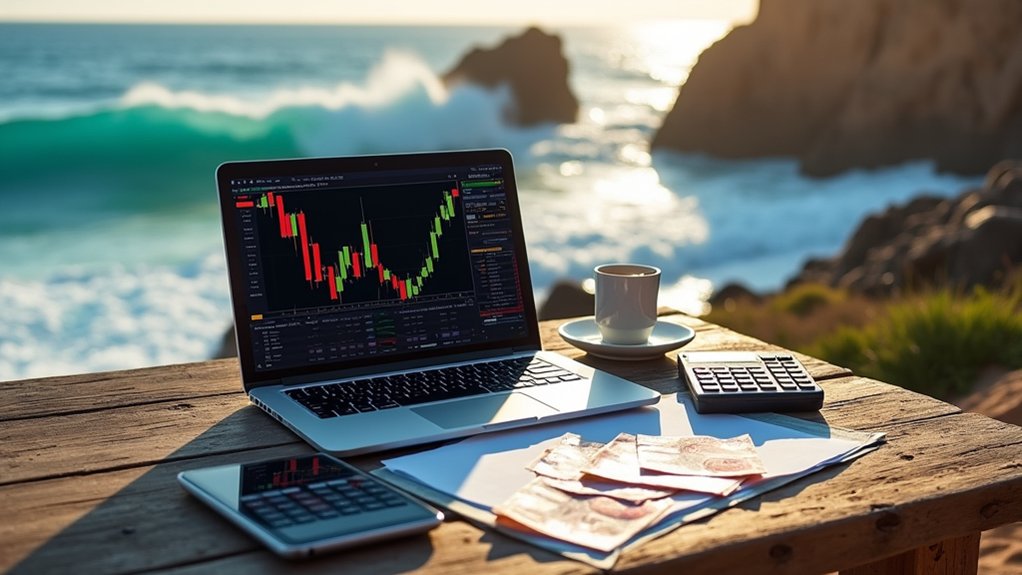
Cabo Verde's forex market exists in a regulatory vacuum—no local watchdog, no domestic licensing, just traders and offshore brokers doing their thing.

The government hasn't banned it. They haven't blessed it either. Trading happens through international platforms regulated elsewhere—ASIC, CySEC, FSA—because nothing's happening domestically.
Brokers like Fusion Markets, IC Markets, and Pepperstone fill the void with spreads from 0.0 pips and leverage up to 1:500.
Commissions run $2.25 to $3.50 per lot.
Minimum deposits? Zero to $200.
MetaTrader 4, MetaTrader 5, cTrader—pick your weapon.
It's all foreign infrastructure serving a market the local authorities have simply ignored. These international brokers typically maintain segregated client funds, keeping trader deposits separate from operational capital—a protection absent from any local framework. The Cape Verdean escudo trades at 95.9808 against the dollar, marking a modest 0.36% gain in the latest session. Major pairs showed mixed performance in June 2025, with EUR/USD maintaining positions near three-year highs while GBP/USD faced seasonal headwinds.
Is Forex Trading Legal in Cabo Verde?

Trading forex in Cabo Verde? It's legal. Sort of.
There's no law saying you can't do it. But there's also no exhaustive regulation saying exactly how it works. The Banco de Cabo Verde oversees financial stuff, but forex? Still developing.
Retail traders can speculate on currency pairs. That's allowed. You just need to follow tax rules and pick internationally regulated brokers who accept Cabo Verdean clients.
Licensing exists for operators—€100,000 minimum capital, AML compliance, the whole dance. For individual traders though? The framework's loose. Legal, yes. Tightly regulated? Not really. The escudo peg to the euro reduces currency risk when trading with international platforms. Brokers must obtain trading licenses and comply with AML/CTF standards under the Financial System Law. When choosing a broker, consider those regulated by established authorities like the FSC Mauritius, which oversees foreign exchange trading activities in its jurisdiction.
Who Regulates Forex Trading in Cabo Verde?

At the center of Cabo Verde's financial system sits the Banco de Cabo Verde. The BCV issues licenses, enforces rules, and monitors forex operations. It oversees anti-money laundering compliance and maintains capital requirements—€100,000 minimum for forex firms. Sounds official, right?
Here's the catch: Cabo Verde lacks a dedicated regulatory authority specifically for forex trading. No locally regulated brokers operate here. The BCV handles general financial oversight, but forex-specific regulation? That's murky territory. Like other central banks, the BCV employs monetary policy tools to influence currency stability and manage exchange rate fluctuations. The BCV also authorizes currency transfers within 30 days of receiving requests from foreign investors and forex account holders.
How Forex Trading Works in Cabo Verde

Retail traders in Cabo Verde don't exactly have a robust local forex market to tap into. Most sign up with offshore brokers—typically European or Australian outfits—because domestic options barely exist.
The 2018 liberalization made moving money overseas legal, which helps. Traders download MetaTrader 4 or MT5, fund accounts via bank transfer or e-wallets, and start clicking buy and sell buttons on EUR/USD or whatever currency pair catches their fancy.
Profits can theoretically flow back in freely convertible currency at prevailing rates. The Banco de Cabo Verde watches for money laundering, but actual retail trading happens beyond its borders. Similar to other island nations, traders should verify that their chosen broker holds proper regulatory oversight from established financial authorities before committing funds.
Best Time to Trade from Cabo Verde
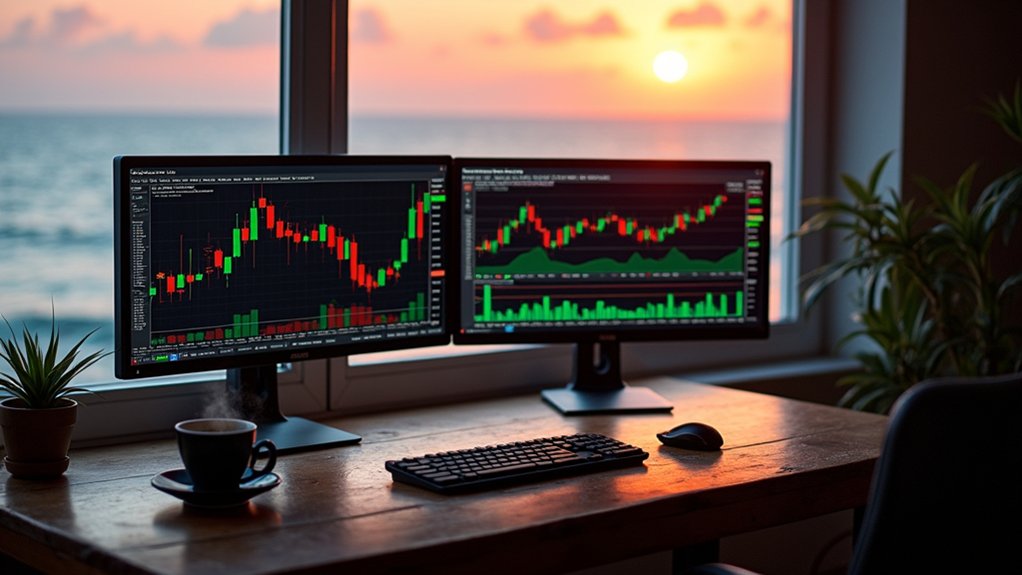
Cabo Verde sits at GMT-1 during standard time, which puts traders in a surprisingly decent spot for catching multiple market sessions without wrecking their sleep schedule.
London opens at 9 AM local time—perfect for morning coffee trades. New York kicks in at 2 PM, right when most people hit their afternoon slump.
The sweet spots look like this:
- London-New York overlap (2-6 PM): Maximum chaos, maximum opportunity
- London morning (9 AM-1 PM): EUR pairs go wild
- New York afternoon (2-11 PM): USD dominates
- Tokyo evening (1-10 AM): For night owls only
Sydney? Nobody cares about Sydney from Cabo Verde.
Different currency pairs show distinct liquidity patterns throughout the day, so matching your trading schedule to the most active hours for your chosen pairs can significantly improve execution quality.
Keep in mind that these times can shift slightly during October/November and March/April when countries like the United States and England adjust their clocks for daylight savings time.
Payments, Deposits and Withdrawals in Cabo Verde
Timing the London open means nothing if a trader can't actually move money in and out of their broker account.
Execution timing is worthless without reliable access to deposit and withdraw funds from your trading account.
Most Cape Verdean deposits arrive via SWIFT transfers in USD or EUR, then convert to CVE—or stay foreign, depending on the broker. Multi-currency cards from Wise, Revolut, and Monzo offer better rates than traditional banks.
Mobile wallets and remittance platforms like WorldRemit or Paysend handle smaller sums faster.
ATMs work fine with Visa and Mastercard in cities.
Dynamic currency conversion? Skip it.
The all-in cost—fees plus exchange spread—determines whether funding actually makes sense.
When withdrawing profits, traders should verify fraud protection measures on each platform to prevent unauthorized access during transfers between forex accounts and local bank accounts.
Taxes, Reporting and Money Rules in Cabo Verde
At the end of every winning streak sits a tax form, a compliance checklist, and a regulator who really does check the boxes. Cabo Verde's Anti-Money Laundering and Counter-Terrorist Financing Act doesn't mess around. Banco de Cabo Verde watches everything.
The rules hit hard:
- Client identification and documentation procedures are mandatory before trading begins
- Suspicious transaction monitoring triggers reports to central authorities
- Financial fines reach CVE 10,000,000 (roughly $100,000 USD)
- Prison sentences extend up to 5 years for serious breaches
Foreign investors must register with the Central Bank before authorization. Asset seizure? Possible. License revocation? Also possible.
Forex Trading Scams and Risks in Cabo Verde
Every day, somewhere between the Atlantic islands and a laptop screen, another trader gets fleeced.
Cabo Verde isn't immune. Ponzi schemes promise fat returns, then vanish. Fake signal sellers peddle garbage data. Social media—Facebook, TikTok, Instagram—spawns about a third of these scams. Direct messages from “friends” push phony platforms.
No CFTC registration? No NFA oversight? Red flag. Withdrawal suddenly impossible? You've been had.
Fraudsters drain accounts, fake testimonials, pressure quick deposits. Bonus systems get gamed by bots creating phantom accounts. Account takeovers happen fast. Chargeback disputes pile up. Before you risk capital, understand that Forex trading is legitimate but requires working with properly regulated brokers to avoid fraud. It's a mess, frankly.
Quick Q and A
Can I Trade Forex Part-Time While Working a Full-Time Job in Cabo Verde?
Cabo Verde imposes no legal restrictions preventing full-time employees from trading forex part-time as a personal investment activity. Individuals may legally trade forex alongside regular employment, provided they use properly regulated brokers and comply with tax obligations.
What Internet Speed Do I Need for Reliable Forex Trading in Cabo Verde?
A minimum of 5-10 Mbps with stable, low-latency connection suffices for retail forex trading. However, traders should prioritize connection reliability and use backup mobile data or secondary ISPs to avoid disconnections during active trades in Cabo Verde.
Do Cabo Verdean Banks Accept Deposits From International Forex Brokers?
Cabo Verdean banks generally accept international deposits from regulated forex brokers, though individual bank policies vary. Traders should verify requirements with their specific bank regarding documentation, transfer fees, currency conversion, and compliance procedures before initiating withdrawals.
Can I Open a Forex Account Using My Cabo Verdean Passport Only?
No, a Cabo Verdean passport alone is insufficient. Forex brokers require additional documentation including proof of address, financial source verification, and compliance with AML/CFT standards mandated by Banco de Cabo Verde's all-encompassing customer identification procedures.
Are There Local Forex Trading Communities or Mentors Available in Cabo Verde?
Information about organized forex trading communities or mentorship programs in Cabo Verde remains limited. Most traders likely connect through online international forums and social media groups rather than established local networks or face-to-face mentorship opportunities.
The Bottom Line
Forex trading in Cabo Verde exists in a regulatory gray zone—legal but barely supervised. Traders navigate offshore brokers, currency conversion headaches, and serious scam risks without much local protection. The escudo complicates everything. Tax obligations? Vague at best. Some people make money. Most don't. The promise of easy income crashes hard against reality: high leverage, volatile markets, and predatory platforms. For Cabo Verdeans jumping in, it's less opportunity and more minefield. That's what's really going on.